RMMClocks Class Reference
Class to manage and configure timing and clock synchronization in the RMM system. More...
#include <RMMClocks.h>
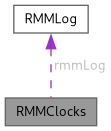
Collaboration diagram for RMMClocks:
Public Member Functions | |
| RMMClocks (RMMRegisterAccess &RMMRegs) | |
| Constructor of the RMMClocks. | |
| rmmStatus | setupAll (TimingMode timingMode) |
| Setup all clocks and the timing system. | |
| rmmStatus | getTimingStatus (TimingStatus *time) |
| Get the status of the timestamping system (including the embedded EVR) in the RMM. | |
| rmmStatus | getCurrentTime (uint32_t *currentTime) |
| Get the current timestamping for RMM. | |
| rmmStatus | setEventCode (uint32_t eventCode) |
| Set MRF event code. | |
| bool | isTimingConfigDone () |
| Checks if the hardware timing and clock configuration is complete. | |
Public Attributes | |
| RMMLog | rmmLog |
| Log handler for RMMClocks messages. | |
Detailed Description
Class to manage and configure timing and clock synchronization in the RMM system.
Constructor & Destructor Documentation
◆ RMMClocks()
| RMMClocks::RMMClocks | ( | RMMRegisterAccess & | RMMRegs | ) |
Constructor of the RMMClocks.
- Parameters
-
RMMRegs Reference to the RMMRegisterAccessinstance used to interact with RMM hardware registers.
Member Function Documentation
◆ getCurrentTime()
| rmmStatus RMMClocks::getCurrentTime | ( | uint32_t * | currentTime | ) |
Get the current timestamping for RMM.
- Parameters
-
currentTime pointer to current time.
- Returns
- rmmStatus
◆ getTimingStatus()
| rmmStatus RMMClocks::getTimingStatus | ( | TimingStatus * | time | ) |
Get the status of the timestamping system (including the embedded EVR) in the RMM.
- Parameters
-
time pointer to struct of timing status registers to be populated.
- Returns
- rmmStatus success
◆ isTimingConfigDone()
| bool RMMClocks::isTimingConfigDone | ( | ) |
Checks if the hardware timing and clock configuration is complete.
Verifies the timing stability by checking two conditions:
- The GTY reference clock is locked (cmn_out_gtyref_lock).
- The timestamp internal initialization is non-zero (cmn_out_ts_int).
- Returns
- true if both the reference lock and timestamp initialization are successful, false otherwise.
◆ setEventCode()
| rmmStatus RMMClocks::setEventCode | ( | uint32_t | eventCode | ) |
Set MRF event code.
- Parameters
-
eventCode Event code number
- Returns
- rmmStatus
◆ setupAll()
| rmmStatus RMMClocks::setupAll | ( | TimingMode | timingMode | ) |
Setup all clocks and the timing system.
- Parameters
-
[in] timingMode The timing mode to be used for clock configuration.
The following TimingMode values are supported:
MRF: Mode for MRF-based timing configuration.LCL: Local mode for internal clock synchronization.EXT: External mode for using external clock sources.
- Returns
rmmSuccessif all configurations are completed successfully. Otherwise, returns an appropriate error status if any clock configuration step fails.
The documentation for this class was generated from the following files:
- include/RMMClocks.h
- src/RMMClocks.cpp
Generated by
 1.13.2